
Roughly six gateways carry a thousand luminaires.
The gateway is the only device in the field with a subscription behind it. Everything else talks over the mesh — which is the whole economic argument for this architecture, and the reason there are so few of them.
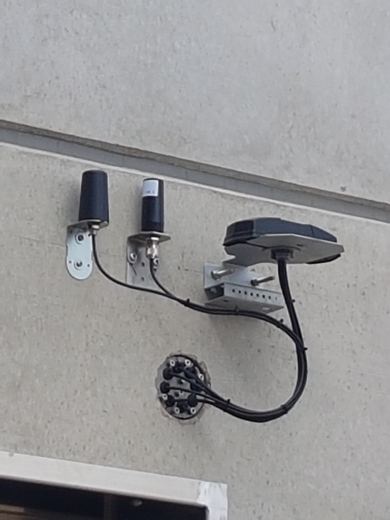
Gateway antennas — installed site
Chosen by the size of the site, not by the catalogue.
A city, a stretch of road and a sports field need different answers. Getting this choice right is most of the installation cost.
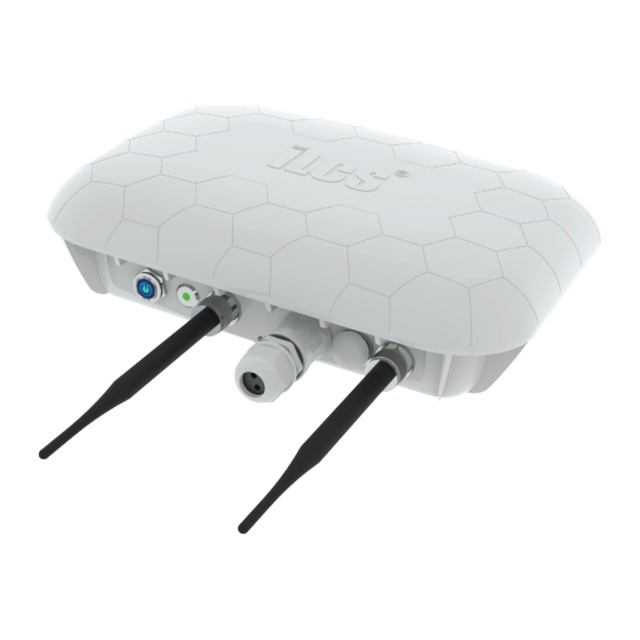
Site gateway
The standard unit for municipal and road networks: collects a cluster of 100 to 150 nodes and carries it to the platform over Ethernet or a cellular link. Mounted on a pole, a wall or in a cabinet, powered over PoE at 24 V, with external antennas.
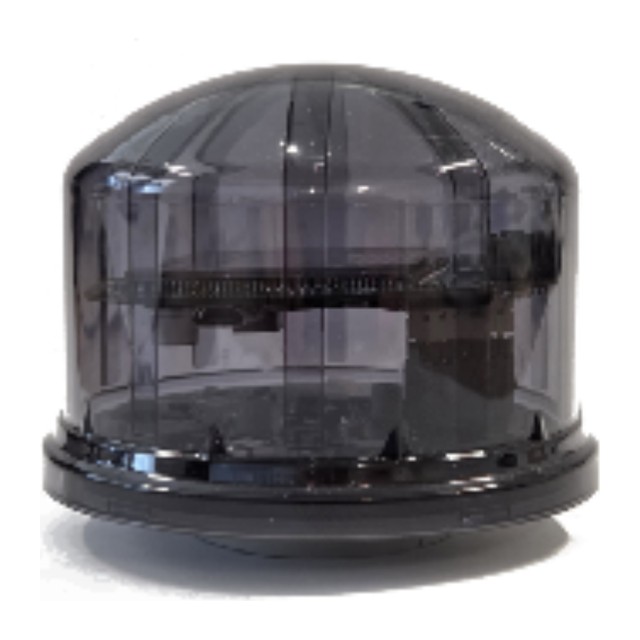
Master node
A luminaire node with its own SIM that also acts as the local brain of the installation: one subscription for the whole site, no mast and no cabinet. For cycle paths, sports fields, solar installations and temporary sites.
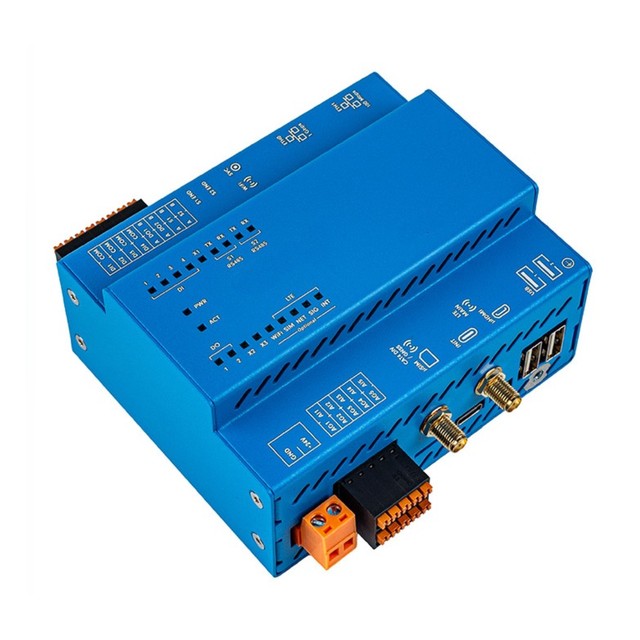
Sentinel — DCU version
The cabinet controller with the gateway module built in: one DIN-rail device measures and switches the feeder pillar and carries the luminaires within reach to the platform — whichever circuits those luminaires are fed from. SMA connectors bring the antennas outside the cabinet where the metal is in the way, and GNSS is on board.
A cabinet you already control therefore becomes the gateway for the luminaires around it — one device instead of two, one place to power and one connection to pay for. The Sentinel in full →
One per cluster, in a cabinet you already own.
One gateway per 150 luminaires, so six or seven for a thousand points. Placing them is a question of power and backhaul, not of radio coverage: inside the cluster, the mesh is our responsibility.
That is what a feeder pillar or technical cabinet of yours gives it — a permanent supply and somewhere to sit. No new supply, no new cabinet, no mast to erect.
The luminaires a gateway carries are a radio group, not a supply group: a cluster normally spans several feeder pillars, and it does not have to follow the lines that feed the poles.
One connection per cluster — the only recurring cost in the whole field network.
Clusters are sized with headroom, so the next hundred luminaires join without a redesign.
Send the pole map and the position of your feeder pillars: we come back with the number of gateways and where we suggest putting them. Coverage inside the cluster is not something you have to verify in advance.
It is not in the control loop. Adaptive decisions are taken on the network itself, between the sensor and the nodes, so a gateway that goes down costs you visibility and not light. Data is buffered in the field and sent when the link returns.
How the loop closes →The gateway holds the list of devices allowed to join the mesh, and reaches the platform through an authenticated tunnel with its own certificate. The connection is outbound: nothing has to be published towards the site from the internet.
Security →A list of coordinates, or a map with the stretches marked, is enough for us to come back with the number of gateways and where they should go.