
The device that turns a luminaire into a controllable one.
It plugs into the socket, talks to the driver over DALI-2 / D4i, joins the mesh, measures what the luminaire consumes and reports its own faults. Under a watt, and it keeps working if everything above it stops.
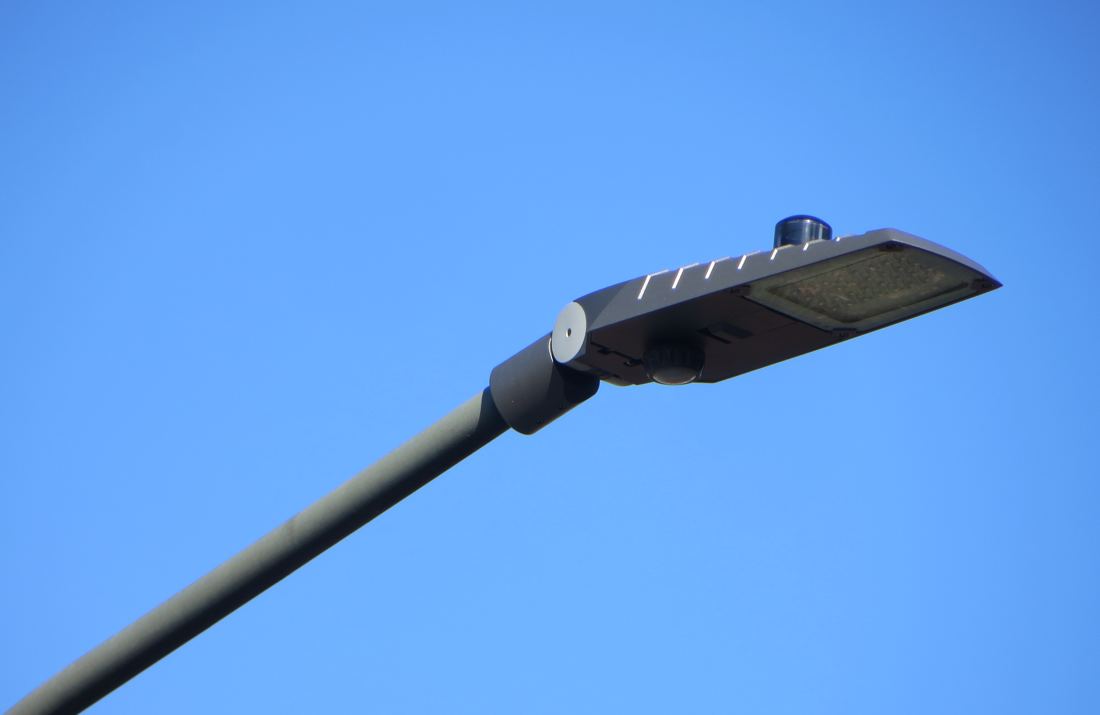
Node on a luminaire — installed site
Four ways in, depending on the luminaire.
All of them on the same mesh and the same platform.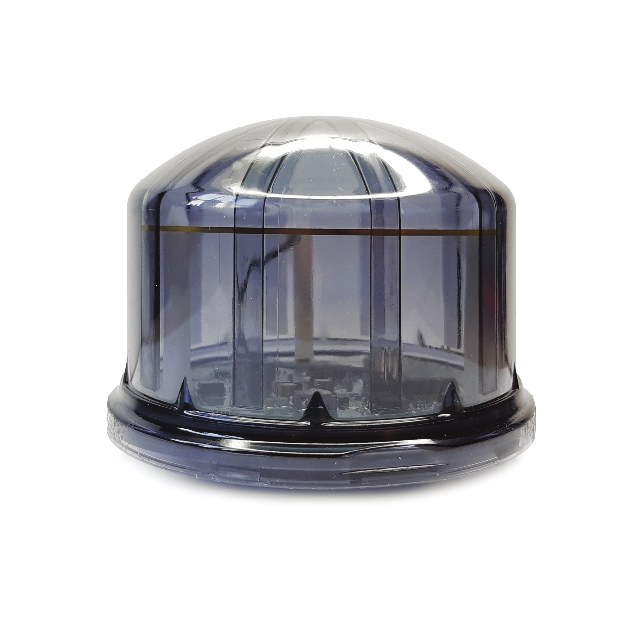
Zhaga Book 18 node
The flagship: fits the Zhaga Book 18 socket on top of the luminaire, DALI-2 / D4i master towards the drivers, light sensor and real-time clock on board, GNSS in the full version.
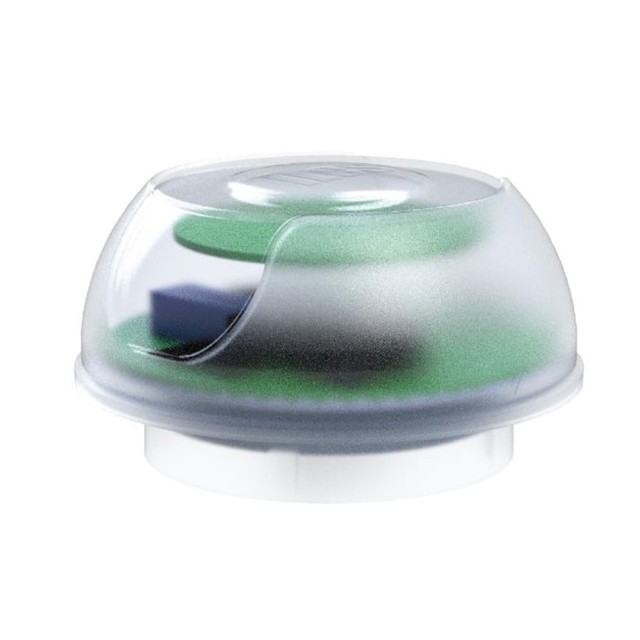
NEMA socket node
The same functions on the ANSI C136.41 socket, for networks standardised on NEMA — including mixed installations where both types sit on one mesh.
Compact 24 V node
Fits inside the luminaire for high-bay, linear and retrofit work: DALI-2 / D4i towards up to 24 drivers, with a boxed IP65 version for damp or industrial spaces.
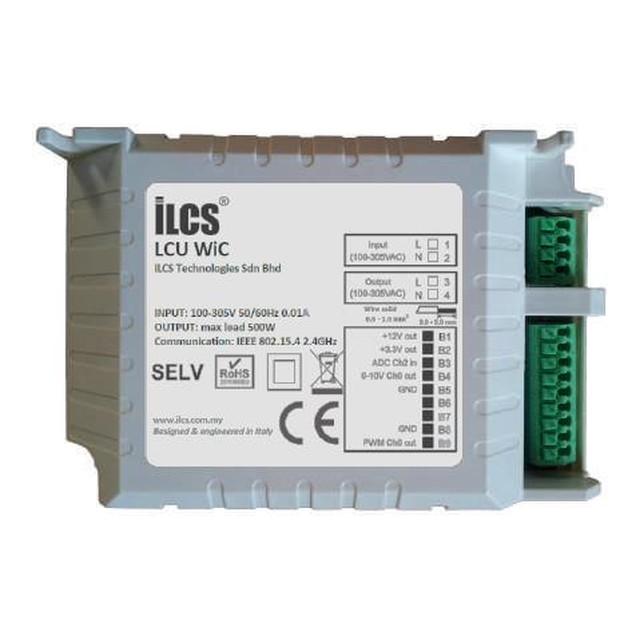
230 V controller
For fittings that are not D4i: 0–10 V dimming, relay switching and on-board metering, so an older installation can still be controlled and measured.
Zhaga node — key specification
Datasheet v2.3 · full document on request| Interfaces | |
|---|---|
| Luminaire | DALI D4i / SR2 master — on/off, dimming, energy and driver data, up to 24 drivers on the bus |
| Driver requirements | D4i to DALI parts 251 (luminaire data), 252 (energy) and 253 (diagnostics) |
| Bus power | Supplied by a D4i driver with integrated bus supply (part 250), or an external bus supply |
| Radio | IEEE 802.15.4 mesh, 2.4 GHz ISM, 16 channels, O-QPSK |
| Socket | Zhaga Book 18 |
| Electrical & mechanical | |
|---|---|
| Supply | 24 V DC from the Zhaga socket |
| Consumption | 0.25 W maximum · 0.375 W with GNSS |
| On board | Light sensor, real-time clock, hardware crypto chip; GNSS (GPS + GLONASS with SBAS) in the full version |
| Protection | IP66 · IK09 |
| Dimensions | Ø 80 × 58.4 mm |
| Temperature | −25 … +70 °C operating · −40 … +120 °C storage |
A mesh of short hops, so each device transmits little.
The network is built from many short hops rather than a few long-range transmissions, so the power each node emits is low — an argument that matters on sites where radio emissions are scrutinised. The independent test reports are part of the documentation we hand over.
A complete CE / RED package with third-party reports.
EN 300 328, EN 301 489-1 / -17, EN 55032 / 55035, EN 61000-3-2 / -3-3, EN 62479 / EN 50663 and EN 62368-1, tested in an independent laboratory. We send the reports, not just the declaration.
Standards & compliance →Standard socket, standard driver, any manufacturer.
The node does not care whose luminaire it is sitting on, as long as the socket is Zhaga or NEMA and the driver is D4i. That is what keeps your next relamping a lighting decision rather than a control-system decision.
Fitted in seconds
Twist onto the socket, no control wiring, no opening the luminaire.
Standalone if needed
Clock, light sensor and position on board: correct switching even with no network at all.
Updated over the air
Signed firmware over the mesh, across generations of hardware still in service.
Send the luminaire list.
Models, sockets and drivers. We check D4i compatibility against your fittings and say which node goes on which — before anything is ordered.