
Savings you can verify. A network you can run.
If you signed a performance contract, the interesting question is not how much a system claims to save. It is whether you can prove what it saved, keep it running for fifteen years, and hand it over to someone else at the end.
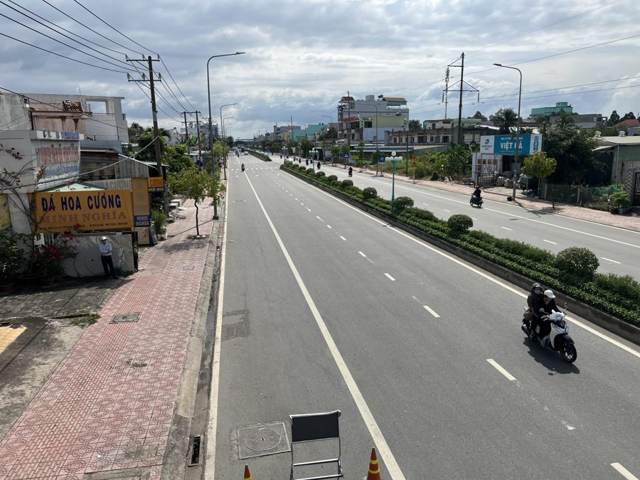
Main road under management — installed site
The measurement is per point and per hour.
Which is the granularity a verification of savings needs, and the granularity most lighting systems cannot produce — because they meter the cabinet, not the luminaire.
We measure against the same LEDs on an astronomical clock, and we write which baseline a figure refers to. A saving without a baseline cannot be verified by anyone.
Energy per luminaire per hour, kept and exportable — the raw material of an M&V report rather than a summary of one.
Each applied class is stored with the measurement that justified it, so a reduction can be defended in an inspection.
Our field results went through peer review with a university and a research consortium, method and baseline in the open.
What the system costs you after the installation.
Over a fifteen-year concession this line matters more than the unit price of a node — and it is where the differences between architectures become large.
About six gateways carry a thousand points. The field network belongs to the installation, so there is no per-device connectivity contract to renew or renegotiate.
Faults arrive as a list with positions. Night patrols and complaint-driven call-outs stop being the way the network is inspected.
Updates and configuration changes reach the devices over the mesh, so a change of policy is not a campaign of visits.
Nodes installed a decade ago are still in service and still receiving firmware. Compatibility across generations is a design rule, not a promise.
On main roads, adaptive operation measured −48 % and −51 % beyond the LED. On residential roads at classes M4 and M5 the same system measured −24.6 %, because the design class is already low. A business case built on one percentage for a whole network will not survive contact with the network.
How the mix is built →Cabinets under control cut the time between a protection tripping and someone knowing about it, which is where penalties and emergency call-outs live. It rarely appears in a business case, and it is often what the operations team cares about most.
Cabinet control →Assume you will not be the operator forever.
Concessions end, contracts are re-tendered and municipalities take assets back in-house. A system that makes that painful is a liability you are signing on behalf of your successor.
The data leaves with the asset
History exportable in standard formats, the device map included — not a summary report, the series.
The platform can move
Hosted by us, in your country, or on the client's own servers, without changing anything in the field.
The luminaires stay open
Standard sockets and D4i drivers, so the next relamping is not dictated by whoever supplied the control system.
Start with the inventory you already have.
Points, classes, cabinets and current consumption. We come back with what is worth doing first, what it measures, and what you would be able to prove at the end of the first year.