
What happens in a minute.
A lighting system that reacts to the road is not a dashboard with a slider. It is a loop that closes in real time, on the street, whether or not anyone is watching. This page follows that loop from end to end.
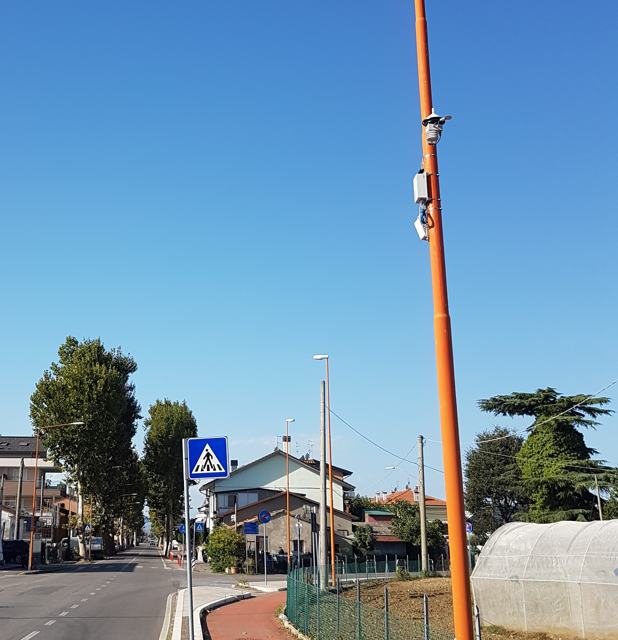
Sensors on the stretch — installed site
Measure, decide, act, record.
Four steps. The first three happen entirely in the street; only the fourth needs the cloud.
On the stretch
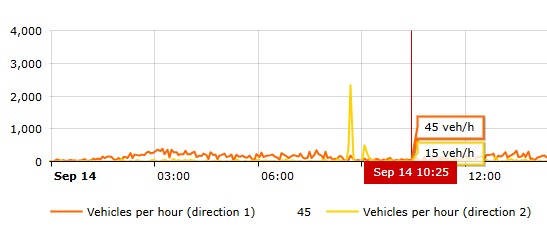
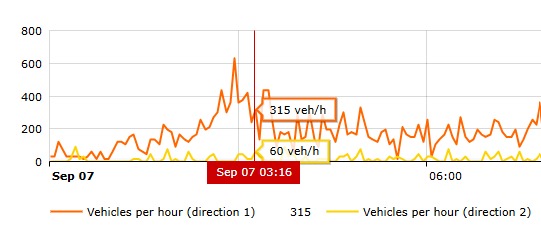
A traffic counter counts vehicles minute by minute; a luminance unit reads the light actually on the road surface; a weather station reports rain, fog and visibility. A few devices per stretch, not one per pole.
On the network
The measurements are turned into the lighting class the standard still allows, on a one minute moving average so the level does not chase individual vehicles. Fog or poor visibility suspends the reduction.
On the luminaire
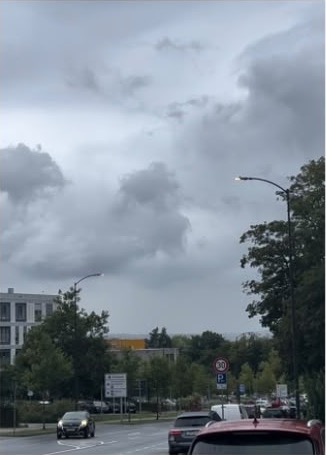
The level reaches every node in the group and is applied on a slow ramp — the change is not visible to a driver. Each node drives its own driver over DALI-2 / D4i.
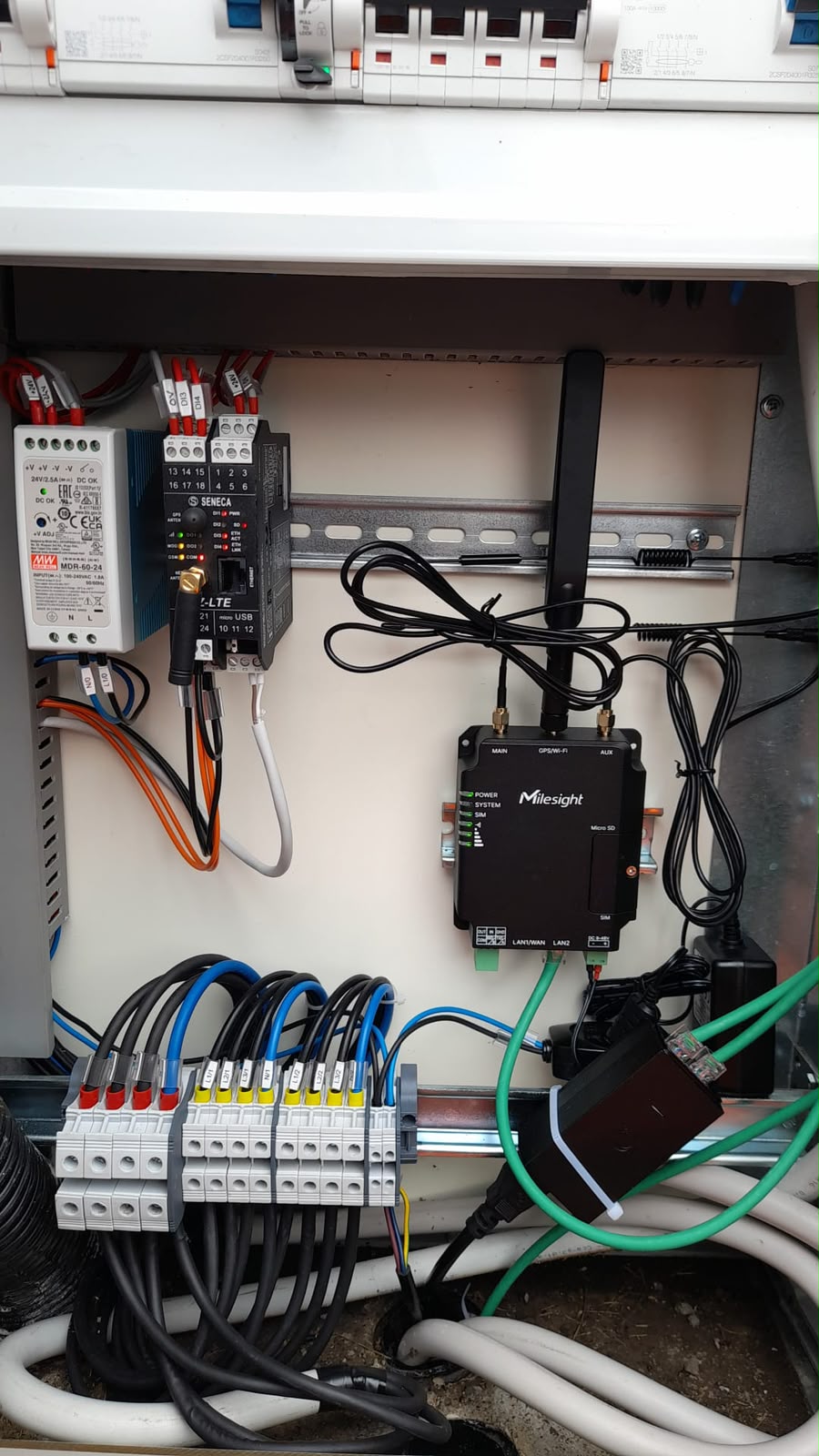
In the platform
Energy, levels, the measurements behind each decision and every fault land in the history — the raw material of any report, inspection or verification of savings.
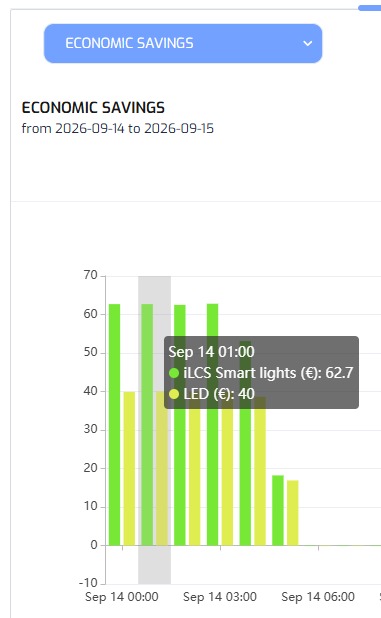
Four kinds of device, and what each is responsible for.
The responsibility matters more than the hardware: it is what decides how the system behaves when something breaks.
| Device | Where | What it is responsible for | If it is lost |
|---|---|---|---|
| Luminaire node | On the socket or inside the luminaire | Driving the driver, keeping the schedule, measuring energy, reporting its own faults | That luminaire falls back to its design level; the rest is unaffected |
| Sensors | A few per stretch | Traffic count, road luminance, weather | The stretch returns to its design class — the safe direction |
| Gateway | One per cluster of 100–150 nodes | Carrying the cluster to the platform over Ethernet or LTE | The street keeps running on local rules; data is sent when the link returns |
| Cabinet controller | On the DIN rail in the cabinet | Metering, protections, doors, switching, autonomous calendar | The cabinet keeps its logic and its local override |
The system builds its own map.
Commissioning is where most projects lose weeks. Here the nodes report their own position, so the inventory is a by-product of the installation rather than a survey afterwards.
01 · Fit
The node goes on the Zhaga or NEMA socket in a few seconds, or inside the luminaire for retrofit and indoor.
02 · Join
It joins the mesh only if it is authorised, on an encrypted channel; the gateway keeps the list of who may join.
03 · Locate
GNSS puts it on the map with its own coordinates and synchronises its clock.
04 · Configure
Groups, profiles and classes are assigned from the platform — and updated later over the air, without going back to the pole.
What happens when something fails.
Every lighting system looks the same in a showroom. The difference shows up on the night the line drops, the sensor ices over or a node dies.
Adaptive lighting, in detail →Decisions are already local: the loop keeps closing and the data is buffered until the link returns.
The stretch returns to the class it was designed for. The standard asks for exactly this, and it is the direction that costs energy rather than safety.
The luminaire reverts to full output and reports itself as failed. A dark lamp is never the fallback.
Reduction is suspended while the weather station reports it, regardless of how empty the road is.