
Adaptive lighting you can put your signature on.
You are the one who has to defend the design class, the verification and the behaviour of the installation on the night something fails. This page is about those three things — not about energy percentages.
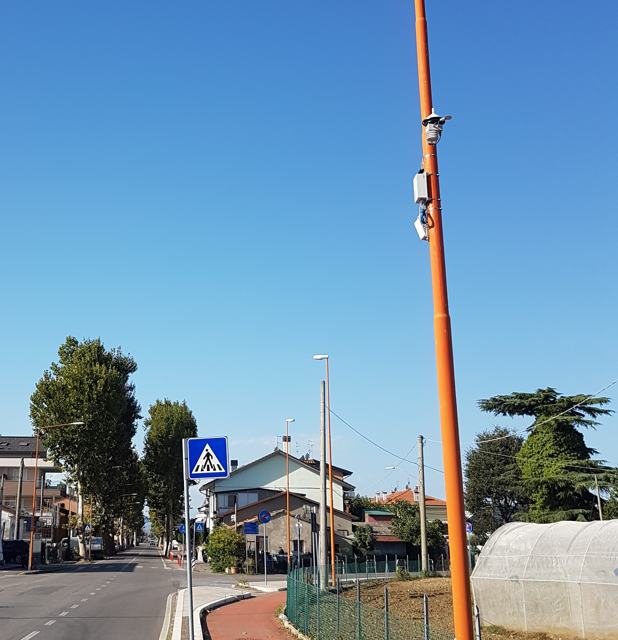
Stretch under adaptive control — installed site
What the standard actually allows.
Adaptive operation is not a discount on the design. It is the rule that lets a road be lit for the traffic it is carrying now, as long as that traffic is measured and the reduction is bounded.
TAI and FAI
Traffic-adaptive and full-adaptive installations, with the conditions each one has to satisfy and how much each may reduce.
Classes and verification
The luminance and uniformity requirements per class, and how the installation is verified once built.
Selecting the class
The parameters that put a road in a class in the first place — the starting point of every adaptive design.
Six clauses that decide whether an adaptive tender is real.
Written this way, they are open to any supplier who can actually do it — and closed to a dimming calendar dressed up as adaptive lighting.
A specification that says "adaptive dimming up to 70 %" without naming the measured quantity will be answered by a timer profile, and you will be the one explaining to the client why the road is under-lit at 23:00 on a Friday. Percentages belong in the business case, classes belong in the specification.
Where a side road takes its class from the main road it joins, the reduction has to propagate consistently. We handle this as a design question — which stretches are dependent on which — before it becomes a configuration.
A few devices per stretch — a traffic counter, a luminance unit for full adaptive, a weather station — plus a node per luminaire. Not one sensor per pole, which is the assumption that makes most adaptive proposals unaffordable.
We work on your drawing, not on ours.
Bring the stretches, the classes and the luminaires you have chosen. We say what adaptive operation is worth there, where sensors go, and where it is not worth doing at all.
Class profile
Which classes the standard allows on each stretch, given its traffic profile through the night.
Sensor layout
Where counting and luminance measurement go, and how many stretches can share them.
Network plan
Gateways, clusters and backhaul, from the pole layout you already have.
Clause review
We will read your draft specification and flag the lines that accidentally exclude everyone but one supplier — including us.
Send the stretches and the classes.
Lengths, design classes, luminaire models and a traffic count if you have one. You get back a class profile and an honest view of where the saving comes from.