
Every cabinet visible. Every kilowatt-hour explained.
The electrical infrastructure is the part nobody watches until it fails or until the invoice arrives. One controller on the DIN rail turns a feeder pillar, a technical cabinet or a plant switchboard into a measured, controllable asset — on the same network and the same platform as the lighting.
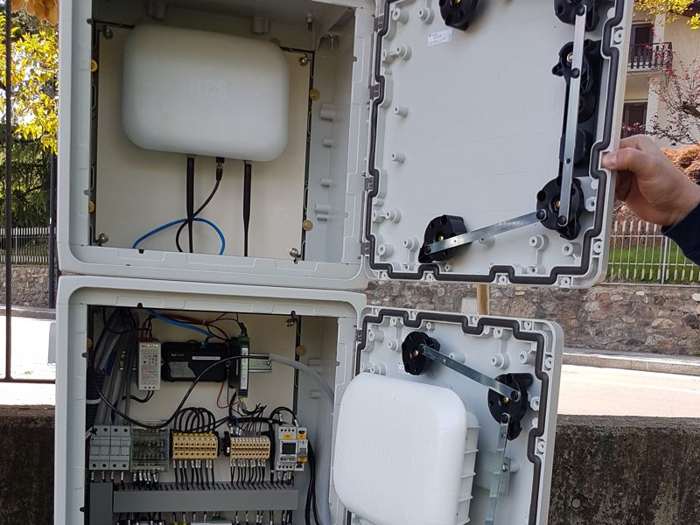
Feeder pillar under control — installed site
Two solutions, one controller.
Both run on the same hardware; what changes is the question you are answering.Cabinet & feeder-pillar control
Protections, doors and mains watched through isolated inputs; breakers and contactors driven from the platform or on a calendar; local lock-out for whoever is working on site; autonomous logic when the link is down.
Answers: what is happening in that cabinet, right now, and who can act on it.
Cabinet & feeder-pillar control →Energy & utility metering
MID-certified meters read over RS-485, per line, per section or per tenant; hourly history; scheduled reports; anomalies found the night they happen instead of on the next invoice.
Answers: where the kilowatt-hours go, and who should pay for them.
Energy & utility metering →The same cabinet problem, in four different buildings.
A feeder pillar on a road and a switchboard in a plant are the same job: measure the lines, watch the protections, switch what needs switching, and never take control away from the person standing in front of it.
Street lighting pillars
Metering per line and faults that arrive before the phone call, across dozens of sites.
Plant switchboards
Consumption per department or per machine section, technical alarms, remote switching across sites.
Motorways and tunnels
Long assets where every cabinet is an hour away by van, and a trip means a dark stretch.
Buildings and campuses
Sub-metering for tenants, technical alarms, one view over a whole portfolio.
One DIN-rail controller, the meters you already trust.
We do not ask you to replace the switchgear. The controller reads third-party MID meters over RS-485, takes the protections through digital inputs and drives the contactors you already have.
Edge controller
108 × 90 × 56 mm on the rail, 24 V, TPM 2.x, signed firmware, hardware watchdog.
Meters
Three-phase MID meters, direct insertion or split-core CTs for a retrofit with no line down.
Backhaul
Ethernet, LTE, or the iLCS mesh where the lighting network is already there.
Platform
Map, history, alarms and reports — hosted in your country or on your own servers.
The metering certification belongs to the meter, not to the controller. We say which meter is proposed and what it is certified for, rather than writing "certified metering" and leaving it there.
Controller specifications →Tell us how many cabinets, and what is inside them.
Lines, meters, protections and how they are fed: enough for us to say what can be measured, what can be switched, and what it costs per cabinet.